Generate Public Certificate And Private Key Pair Mac
SiteGround uses key pairs for SSH authentication purposes, as opposed to plain username and password. More information on SSH keys is available here. You can generate an SSH key pair in Mac OS following these steps: Open up the Terminal by going to Applications - Utilities - Terminal. Sep 11, 2018 The first thing to do would be to generate a 2048-bit RSA key pair locally. This pair will contain both your private and public key. You can use Java key tool or some other tool, but we will be working with OpenSSL. To generate a public and private key with a certificate signing request (CSR), run the following OpenSSL command. May 03, 2019 How to generate a certificate signing request and key pair in macOS Keychain Access. Skip to content. This how-to will walk you through generating a key pair and certificate signing request (CSR) for submission to SSL.com in macOS 10.14 (Mojave. Export Certificates and Private Key from a PKCS#12 File with OpenSSL.
- Public Private Key Encryption
- Generate Public Certificate And Private Key Pair Mac And Windows
- Generate Public Certificate And Private Key Pair Mac And Cheese
- Advantages Of Private Key Encryption
- Generate Public Certificate And Private Key Pair Mac Keyboard
Overview
Cryptographic keys are strings of bytes that you combine with other data in specialized mathematical operations to enhance security. At the lowest level, this usually means participating in either encryption and decryption or digital signing and verification. You can use these basic operations directly, such as when you encrypt data before sending it through an insecure channel. You also use them implicitly, such as when you verify the digital signature on a certificate as a byproduct of a trust evaluation.
Keys vary based on the operations they support. For example, you use public and private key pairs to perform asymmetric encryption, whereas you use symmetric keys to conduct symmetric encryption. Similarly, one key might work for a 1024-bit RSA algorithm, while another might be suitable for a 256-bit elliptic curve algorithm. Use the functions in this section when you need to handle cryptographic keys.
Topics
 Getting an Existing Key
Learn how to obtain an existing cryptographic key.
Storing Keys in the KeychainStore and access cryptographic keys in the keychain.
class SecKeyfunc SecKeyGetTypeID() -> CFTypeIDReturns the unique identifier of the opaque type to which a key object belongs.
Generating New Cryptographic KeysCreate both asymmetric and symmetric cryptographic keys.
Storing Keys in the Secure EnclaveCreate an extra layer of security for your private keys.
func SecKeyCreateRandomKey(CFDictionary, UnsafeMutablePointer<Unmanaged<CFError>?>?) -> SecKey?func SecKeyCopyPublicKey(SecKey) -> SecKey?Gets the public key associated with the given private key.
Key Generation AttributesPublic Private Key Encryption
Use attribute dictionary keys during cryptographic key generation.
func SecKeyIsAlgorithmSupported(SecKey, SecKeyOperationType, SecKeyAlgorithm) -> BoolReturns a Boolean indicating whether a key is suitable for an operation using a certain algorithm.
func SecKeyGetBlockSize(SecKey) -> IntGets the block length associated with a cryptographic key.
func SecKeyCopyAttributes(SecKey) -> CFDictionary?struct SecKeyAlgorithmenum SecKeyOperationTypeThe types of operations that you can use a cryptographic key to perform.
Storing Keys as DataCreate an external representation of a key for transmission.
func SecKeyCopyExternalRepresentation(SecKey, UnsafeMutablePointer<Unmanaged<CFError>?>?) -> CFData?Returns an external representation of the given key suitable for the key's type.
func SecKeyCreateWithData(CFData, CFDictionary, UnsafeMutablePointer<Unmanaged<CFError>?>?) -> SecKey?Restores a key from an external representation of that key.
func SecKeyCopyKeyExchangeResult(SecKey, SecKeyAlgorithm, SecKey, CFDictionary, UnsafeMutablePointer<Unmanaged<CFError>?>?) -> CFData?Performs the Diffie-Hellman style of key exchange with optional key-derivation steps.
struct SecKeyKeyExchangeParameterThe dictionary keys used to specify Diffie-Hellman key exchange parameters.
Using Keys for EncryptionPerform asymmetric and symmetric encryption and decryption using cryptographic keys.
Generate Public Certificate And Private Key Pair Mac And Windows
func SecKeyCreateEncryptedData(SecKey, SecKeyAlgorithm, CFData, UnsafeMutablePointer<Unmanaged<CFError>?>?) -> CFData?Encrypts a block of data using a public key and specified algorithm.
func SecKeyCreateDecryptedData(SecKey, SecKeyAlgorithm, CFData, UnsafeMutablePointer<Unmanaged<CFError>?>?) -> CFData?Decrypts a block of data using a private key and specified algorithm.
Signing and VerifyingCreate and evaluate digital signatures to establish the validity of code or data.
func SecKeyCreateSignature(SecKey, SecKeyAlgorithm, CFData, UnsafeMutablePointer<Unmanaged<CFError>?>?) -> CFData?Creates the cryptographic signature for a block of data using a private key and specified algorithm.
func SecKeyVerifySignature(SecKey, SecKeyAlgorithm, CFData, CFData, UnsafeMutablePointer<Unmanaged<CFError>?>?) -> BoolVerifies the cryptographic signature of a block of data using a public key and specified algorithm.
func SecKeyGeneratePair(CFDictionary, UnsafeMutablePointer<SecKey?>?, UnsafeMutablePointer<SecKey?>?) -> OSStatusfunc SecKeyEncrypt(SecKey, SecPadding, UnsafePointer<UInt8>, Int, UnsafeMutablePointer<UInt8>, UnsafeMutablePointer<Int>) -> OSStatusfunc SecKeyDecrypt(SecKey, SecPadding, UnsafePointer<UInt8>, Int, UnsafeMutablePointer<UInt8>, UnsafeMutablePointer<Int>) -> OSStatusfunc SecKeyRawSign(SecKey, SecPadding, UnsafePointer<UInt8>, Int, UnsafeMutablePointer<UInt8>, UnsafeMutablePointer<Int>) -> OSStatusGenerates a digital signature for a block of data.
func SecKeyRawVerify(SecKey, SecPadding, UnsafePointer<UInt8>, Int, UnsafePointer<UInt8>, Int) -> OSStatusstruct SecPaddingThe types of padding to use when you create or verify a digital signature.
func SecKeyGeneratePairAsync(CFDictionary, DispatchQueue, SecKeyGeneratePairBlock)func SecKeyGenerateSymmetric(CFDictionary, UnsafeMutablePointer<Unmanaged<CFError>?>?) -> SecKey?func SecKeyCreateFromData(CFDictionary, CFData, UnsafeMutablePointer<Unmanaged<CFError>?>?) -> SecKey?Constructs a SecKeyRef object for a symmetric key.
func SecKeyDeriveFromPassword(CFString, CFDictionary, UnsafeMutablePointer<Unmanaged<CFError>?>?) -> SecKey?Returns a key object in which the key data is derived from a password.
func SecKeyWrapSymmetric(SecKey, SecKey, CFDictionary, UnsafeMutablePointer<Unmanaged<CFError>?>?) -> CFData?func SecKeyUnwrapSymmetric(UnsafeMutablePointer<Unmanaged<CFData>?>, SecKey, CFDictionary, UnsafeMutablePointer<Unmanaged<CFError>?>?) -> SecKey?enum SecKeySizes
The supported sizes for keys of various common types.
struct SecKeyUsageThe flags that indicate key usage in the KeyUsage extension of a certificate.
typealias SecPublicKeyHashtypealias SecKeyGeneratePairBlockA block called with the results of a call to SecKeyGeneratePairAsync(_:_:_:).
Jun 27, 2016 Hi, I have an host based on ESXi 4.1 but my evaluation mode has expired. Unfortunately when I 'Access your VMware vSphere Hypervisor license and download' from the email (Access your VMware ESXi 4.1 License) that I have received, are redirected in. 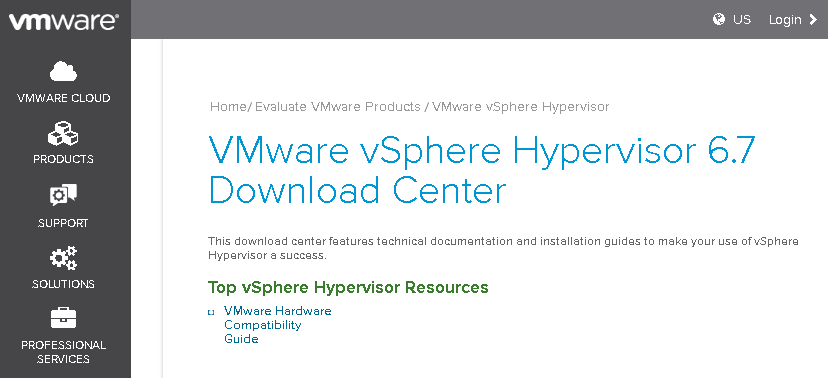 Jan 12, 2012 Click “License & download” and login with your vmware user account or register yourself a new one. Under “Option 2: Download ESXi” you will find the VMware vSphere Hypervisor 4.x License. Please see the following post if you came to find the license key for VMWare ESXi 5.1.
enum SecCredentialTypeThe credential type to be returned by SecKeyGetCredentials.
See Also
Combine certificates and cryptographic keys into identities.
With a secure shell (SSH) key pair, you can create virtual machines (VMs) in Azure that use SSH keys for authentication, eliminating the need for passwords to sign in. This article shows you how to quickly generate and use an SSH public-private key file pair for Linux VMs. You can complete these steps with the Azure Cloud Shell, a macOS or Linux host, the Windows Subsystem for Linux, and other tools that support OpenSSH.
Generate Public Certificate And Private Key Pair Mac And Cheese
Note
VMs created using SSH keys are by default configured with passwords disabled, which greatly increases the difficulty of brute-force guessing attacks.
For more background and examples, see Detailed steps to create SSH key pairs.
For additional ways to generate and use SSH keys on a Windows computer, see How to use SSH keys with Windows on Azure.
Supported SSH key formats
Azure currently supports SSH protocol 2 (SSH-2) RSA public-private key pairs with a minimum length of 2048 bits. Other key formats such as ED25519 and ECDSA are not supported.
Create an SSH key pair
Use the ssh-keygen command to generate SSH public and private key files. By default, these files are created in the ~/.ssh directory. You can specify a different location, and an optional password (passphrase) to access the private key file. If an SSH key pair with the same name exists in the given location, those files are overwritten.
The following command creates an SSH key pair using RSA encryption and a bit length of 4096:
If you use the Azure CLI to create your VM with the az vm create command, you can optionally generate SSH public and private key files using the --generate-ssh-keys option. The key files are stored in the ~/.ssh directory unless specified otherwise with the --ssh-dest-key-path option. The --generate-ssh-keys option will not overwrite existing key files, instead returning an error. In the following command, replace VMname and RGname with your own values:
Provide an SSH public key when deploying a VM
Advantages Of Private Key Encryption
To create a Linux VM that uses SSH keys for authentication, specify your SSH public key when creating the VM using the Azure portal, Azure CLI, Azure Resource Manager templates, or other methods:
If you're not familiar with the format of an SSH public key, you can display your public key with the following cat command, replacing ~/.ssh/id_rsa.pub with the path and filename of your own public key file if needed:
A typical public key value looks like this example:
If you copy and paste the contents of the public key file to use in the Azure portal or a Resource Manager template, make sure you don't copy any trailing whitespace. To copy a public key in macOS, you can pipe the public key file to pbcopy. Similarly in Linux, you can pipe the public key file to programs such as xclip.
The public key that you place on your Linux VM in Azure is by default stored in ~/.ssh/id_rsa.pub, unless you specified a different location when you created the key pair. To use the Azure CLI 2.0 to create your VM with an existing public key, specify the value and optionally the location of this public key using the az vm create command with the --ssh-key-values option. In the following command, replace VMname, RGname, and keyFile with your own values:
If you want to use multiple SSH keys with your VM, you can enter them in a space-separated list, like this --ssh-key-values sshkey-desktop.pub sshkey-laptop.pub.
SSH into your VM
With the public key deployed on your Azure VM, and the private key on your local system, SSH into your VM using the IP address or DNS name of your VM. In the following command, replace azureuser and myvm.westus.cloudapp.azure.com with the administrator user name and the fully qualified domain name (or IP address):
If you specified a passphrase when you created your key pair, enter that passphrase when prompted during the login process. The VM is added to your ~/.ssh/known_hosts file, and you won't be asked to connect again until either the public key on your Azure VM changes or the server name is removed from ~/.ssh/known_hosts.
If the VM is using the just-in-time access policy, you need to request access before you can connect to the VM. For more information about the just-in-time policy, see Manage virtual machine access using the just in time policy.
Next steps
Generate Public Certificate And Private Key Pair Mac Keyboard
For more information on working with SSH key pairs, see Detailed steps to create and manage SSH key pairs.
If you have difficulties with SSH connections to Azure VMs, see Troubleshoot SSH connections to an Azure Linux VM.